


Helen Keller was more than a disability rights advocate. She stood firmly against racial injustice in America. Her powerful words exposed the mockery of constitutional rights and the brutal reality of segregation.
This article explores her fearless stance on racism. We’ll uncover quotes that challenged white supremacy and demanded equality. Her activism remains relevant today as we continue fighting social barriers and discrimination.
Who Was Helen Keller Beyond Disability Advocacy?
Helen Keller became deaf and blind at 19 months old. Despite these challenges, she graduated from Radcliffe College. She became an internationally recognized author and lecturer.
But her work extended far beyond disability rights. She was a radical social justice activist. Keller fought for workers’ rights, women’s suffrage, and civil rights. She joined the Socialist Party in 1909 and supported the NAACP’s mission.
Her intersectional activism connected different struggles. She understood that oppression took many forms. Whether fighting for the blind community or African Americans, she saw the same enemy: systematic inequality.
Helen Keller’s Letter to the NAACP (1916)
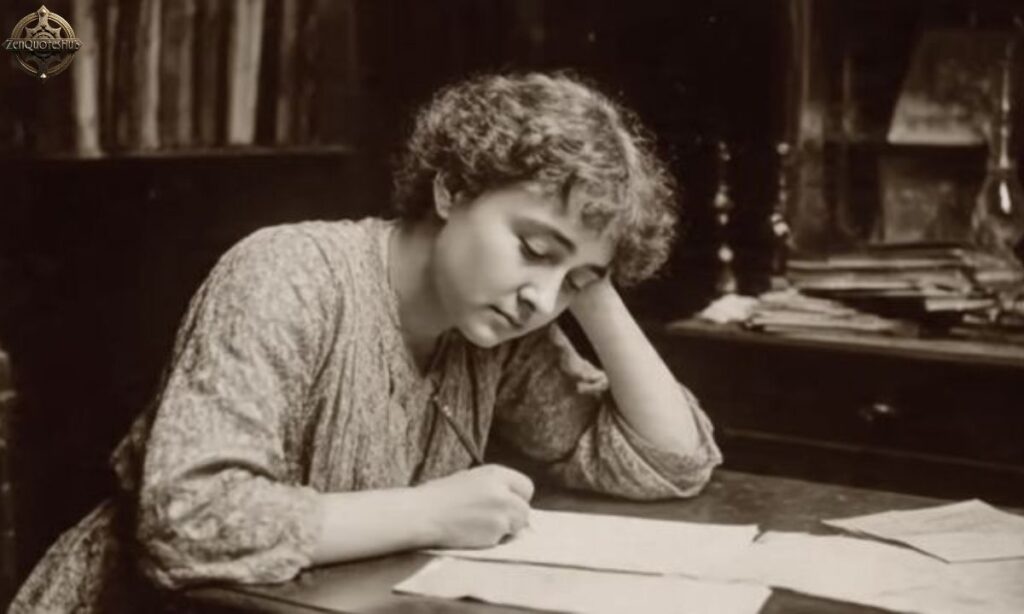
In February 1916, Keller wrote a powerful letter endorsing the NAACP. She didn’t hold back her criticism of America’s social climate. Her words cut through the hypocrisy of American democracy.
Her most striking statement came directly:
- “Nay, let me say it, this great republic of ours is a mockery when citizens in any section are denied the rights which the Constitution guarantees them, when they are openly evicted, terrorized and lynched by prejudiced mobs, and their persecutors and murderers are allowed to walk abroad unpunished.”
This letter showed Keller’s understanding of mob violence. She called out the persecution of African Americans. More importantly, she demanded accountability for unpunished crimes.
The NAACP was fighting against systematic racism. Keller aligned herself with this struggle. She refused to stay silent about injustice.
Helen Keller on Lynching and White Supremacy (1946)
Thirty years later, Keller’s conviction hadn’t wavered. In a letter to Nella Braddy dated September 1946, she addressed America’s continuing violence. Her words carried both disappointment and warning.
She wrote about the ongoing crisis:
- “The continued lynchings and other crimes against negroes, whether in New England or the South, and unspeakable political exponents of white supremacy, according to all recorded history, augur ill for America’s future.”
This quote revealed several important points. First, she noted that racism wasn’t just a Southern problem. New England also participated in terrorizing Black citizens. Second, she connected historical patterns to future consequences.
Keller understood that political exponents of white supremacy threatened democracy. She saw how prejudice poisoned the entire nation. Her warning about America’s future proved prophetic.
Helen Keller’s Stand Against Segregation (1951)
In 1951, Keller took a controversial position within the blind community. She opposed the W.C. Handy Foundation for the Blind. Her reasoning was rooted in principle rather than practicality.
Her statement on segregation was clear:
- “Personally I do not believe in a national agency devoted only to the negro blind because in spirit and principle I am against all segregation, and the blind already have difficulties enough without being cramped and harassed by social barriers.”
This position showed Keller’s commitment to equality. She believed segregation harmed everyone it touched. Even well-intentioned separate institutions reinforced discrimination.
Her logic was simple but powerful. The blind community already faced enormous challenges. Adding racial segregation only created more barriers. She advocated for integrated solutions that served all people.
Some criticized this stance as impractical. But Keller understood that separate could never be equal. Her disability rights work and civil rights activism were inseparable.
Why Helen Keller’s Anti-Racism Activism Matters Today
Keller’s quotes remain relevant in modern America. We still grapple with police violence and systematic racism. Her words about unpunished crimes echo in today’s justice system debates.
Her intersectional approach offers important lessons. Disability rights and racial justice connect. Social reform requires addressing all forms of oppression simultaneously.
Keller showed that privilege doesn’t excuse silence. Despite being white, she used her platform for African Americans. She understood that human rights couldn’t be selective.
Her activism reminds us that heroes are complex. We can celebrate her disability advocacy while learning from her racial justice work. Both aspects made her a complete social justice warrior.
The Connection Between Disability Rights and Civil Rights
Keller recognized an important truth. Different marginalized groups face similar oppression. The tactics used against disabled people mirrored those used against African Americans.
Both communities were denied Constitutional rights. Both faced systematic exclusion from society. Both were considered less than fully human by prejudiced mobs.
This understanding shaped her activism. She couldn’t fight for one group while ignoring another. True equality meant lifting all oppressed people together.
Modern activists continue this intersectional work. The disability justice movement explicitly connects to racial justice. Keller pioneered this holistic approach to social reform.
How Helen Keller Challenged American Hypocrisy

Keller’s greatest contribution was exposing contradictions. America claimed to be a democracy. Yet it denied rights to millions of citizens.
She called this what it was: a mockery. Her language was deliberately provocative. She wanted to shake people from comfortable complacency.
Her criticism targeted both individuals and systems. She condemned terrorized citizens and their persecutors. But she also questioned the political climate that enabled violence.
This dual focus remains important. We must address both personal prejudice and structural racism. Keller understood that meaningful change requires both levels of work.
FAQs
What did Helen Keller say about racism in America?
She called America “a mockery” when citizens were denied Constitutional rights, evicted, terrorized, and lynched by prejudiced mobs.
Did Helen Keller support the NAACP?
Yes, she wrote a letter in 1916 endorsing their work and condemning the social climate of racial violence in the United States.
Was Helen Keller against segregation?
Yes, she opposed all segregation in spirit and principle, including separate agencies for the blind community based on race.
What did Helen Keller say about lynching?
She stated that continued lynchings and white supremacy “augur ill for America’s future” according to all recorded history.
How did Helen Keller connect disability rights and civil rights?
She believed both communities faced social barriers and that adding segregation to disability created additional unnecessary hardships.
Why is Helen Keller’s activism on racism important today?
Her intersectional approach and willingness to use her privilege to fight injustice remain relevant models for modern social justice work.
Conclusion
Helen Keller’s quotes on racism reveal a fearless advocate. She confronted America’s darkest failures without hesitation. Her words about lynching, segregation, and constitutional mockery still resonate today.
Her legacy teaches us important lessons about activism. Fighting one form of oppression means fighting all forms. We honor her memory by continuing the work of social reform she championed throughout her remarkable life.

My name is Wilson, and I specialize in creating inspiring and meaningful quotes. With 4 years of experience in the quotes niche, I craft words that motivate, connect, and leave a lasting impact.